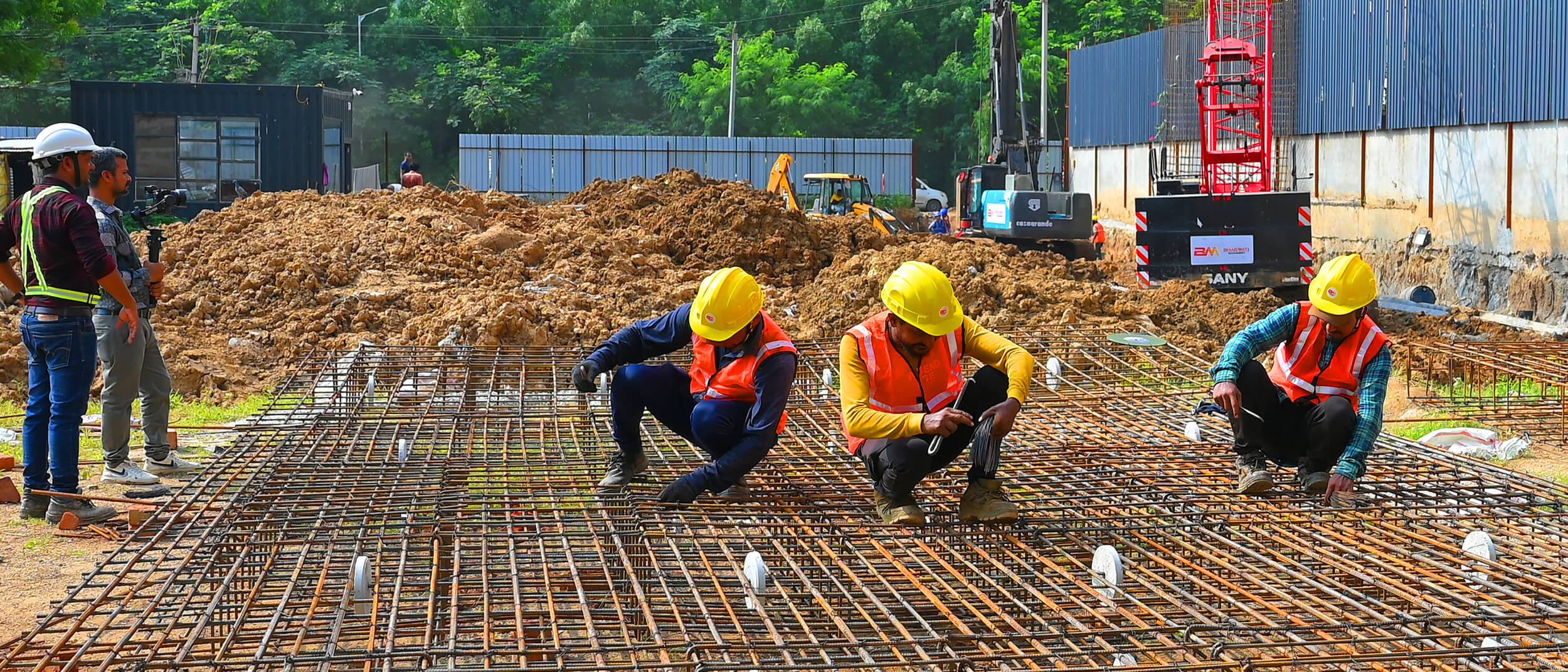
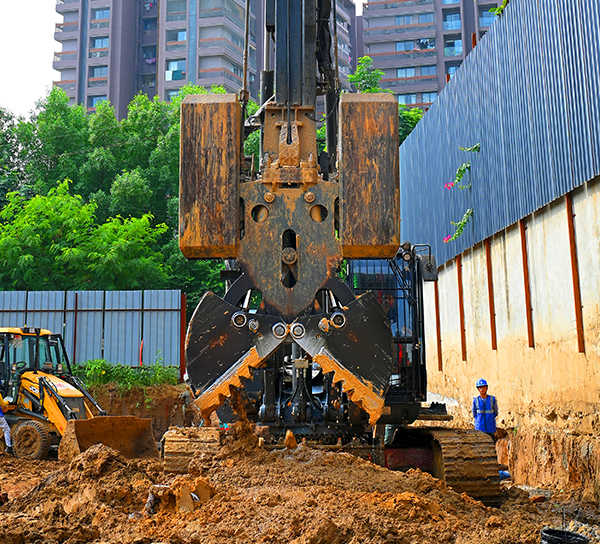
The development of urban real estate is a multifaceted and complex process that demands innovative approaches to meet the specific problems of cities with dense urban areas. As cities grow increasing, the demand for effective and efficient methods of construction becomes ever more crucial. Of these, Diaphragm wall construction in India has emerged as become important component of foundation construction. It provides the stability and strength needed in difficult circumstances.
In this blog, we’ll discuss the importance of diaphragm walls to the development of urban real estate, particularly focusing on how they are implemented throughout diverse Indian cities, and the benefits they bring.
Understanding Diaphragm Walls
Diaphragm walls can be described as reinforced concrete structures constructed beneath the surface and function as retaining walls to help in the digging of soil. The walls are built to resist horizontal pressures from water and soil. This makes them especially effective in urban areas which are limited in space and risk of soil movement is very high.
Diaphragm wall construction requires specialized equipment and methods that include the use of trenching equipment and hydraulic grab systems that provides a very efficient and reliable solution to foundation stability. Because of their strong designs and methods of construction diaphragm walls could be vital in all kinds of urban developments, ranging including high-rise structures to sprawling commercial structures.
Key Benefits of Diaphragm Wall Construction in Urban Settings
Space Efficiency
In urban areas that are crowded, such as Ahmedabad, available the land can be very limited. Diaphragm wall construction India allows large excavations while keeping an extremely small footprint. This can be particularly advantageous when you live in dense areas and allows builders to make the most of land.
Utilizing diaphragm walls construction projects are able to achieve more depths for basements as well as underground structures without the massive destruction of land that is typically associated with conventional wall retaining. This effective use of space results in increased efficiency and feasibility of the project.
Soil Stabilization
A major and important aspects of urban development is the stabilization of soil. Diaphragm walls are excellent for soil stabilization, stopping soil erosion, and also reducing possibility of landslides occurring during construction. This is essential for urban areas with underground water tables. Different soil types could create significant dangers for construction work, which makes ground anchor systems essential for strength and stability.
The capacity of diaphragm walls to hold soil in place effectively implies they protect the adjacent structures and stop soil loss, while ensuring security and stability through the whole building process.
Reduces Vibration and Noise
Construction in urban areas often face problems related to noise and vibrations which can disturb the surrounding area. Diaphragm walls reduce the impact of these noises because it is quieter and less disruptive construction methods in comparison to conventional methods, which makes it a better community-friendly alternative.
This is particularly important when you live in areas with a high density of people in which businesses and residents are sensitive to the noise of construction. With diaphragm walls, contractors are able to contribute to an easier construction process which respects the community’s tranquillity and peace.
Environmental Benefits
Diaphragm walls could have a positive environmental impact. They typically generate less waste and use lesser materials than the other foundations. In addition, they aid in managing groundwater levels, which reduces the chance of flooding in urban areas.
Through reducing the use of materials and maximizing construction methods. Diaphragm wall construction projects are able to follow sustainable building practices. This environmentally friendly approach does not just help local laws and improves the general image of companies that are who are dedicated to stewardship of the environment.
Variability and Adaptability
Diaphragm walls are a great choice to various urban developments that include residential construction or commercial structures, as well as infrastructure development. The flexibility of these walls allows them to satisfy the particular requirements of a variety of projects such as Ahmedabad as well as other cities.
Whether it’s an office building with a taller structure or an underground parking garage, Diaphragm walls are able to provide customized solutions that meet particular project specifications. They are able to be adapted to a variety of types of soils and needs is a great benefit for those who want to be innovative with their building practices.
The Growing Demand of Diaphragm Wall Construction in India
With the rapid growth of urbanization in India, there is a demand for diaphragm wall construction in India is currently on an increase. Cities like Ahmedabad is known for its rapid growth, are experiencing the increasing emphasis on environmentally sustainable building practices that limit the use of land while increasing the structural strength.
The growing real estate market within these cities calls for modern construction methods that are able to efficiently address the land-based constraints as well as environmental problems. The growing demands for infrastructure highlights the necessity for diaphragm walls to be used in new construction projects to ensure growth is in line with growing city population.
Choosing the Right Diaphragm Wall Construction Services
If you are deciding on a contractor to do diaphragm wall constructions in India, it is important to consider the following aspects:
Why Choose Professional Diaphragm Wall Construction Services?
Expertise and Experience: Look for a diaphragm wall construction company that has a proven track record of diaphragm walls construction projects. Contractors with a wealth of experience is better equipped to deal with the challenges that are involved in the construction of cities.
Technologies and Equipment: Ensure your contractor is using modern technology and equipment to ensure efficient construction. Modern machinery will significantly improve the efficiency and effectiveness of wall diaphragm installation.
Sustainable Practices: Choose a company that is committed to environmentally sustainable techniques in their construction. Construction companies that use sustainable techniques can positively impact the local community and to the environmental.
Bhagwati Machinery focuses on providing eco-friendly construction solutions that ensure the sustainability of every construction projects.
Conclusion
Diaphragm wall construction in India is becoming increasingly in the development of urban real estate especially in the rapidly expanding cities. Their capacity to ensure durability, efficacy as well as the environment makes the ideal option in modern-day construction projects. Developers are seeking innovative approaches for navigating the complex urban spaces Diaphragm walls are bound to have a significant role to play in the shaping of the future of modern infrastructure for urban areas.
If you’re thinking about the construction of a project that will require solid foundations, you should consider the possibility of exploring diaphragm wall construction could be the most effective strategy for successful completion.
The strategic implementation of diaphragm walls doesn’t just enhance their structural strength, but they also encourage sustainable urban growth, which opens the way to a better future for India’s urban property market, alongside a piling company in India.
Piling is a technique of construction which involves driving a rectangular or circular structures into the ground in order to make a strong base for structures and buildings. The technique is used when the soil isn’t strong enough to hold the weight of the structure or when the structure is required to be constructed on a slope, or in an area that has a high water table. Piling’s primary purpose is to shift the load of the structure to a higher level of earth or rock which is stronger and more durable.
What is the different Piling Types?
There are different types of piling, including driven piles, drilled piles, and driven cast-in-place piles. Each has distinct advantages and disadvantages. The most popular form of piling in use today is driven piles that are made of concrete, steel or a mixture of the two.
How Does Piling Work?
Piling begins with the determination of the type of pile appropriate for the task dependent on factors such as the soil condition, the mass of the structure, as well as the intention of using the structure. After the kind of pile is decided the pile driving equipment can be used to drive the pile in the soil. The pile-driving equipment consists of an enormous crane that has a substantial mass connected to a hammer which is utilized to force the pile in the soil.
The pile is moved to a point sufficient to be able to support the weight of the structure. Piling contractors in India have a crucial role in assessing the strength of soil, choosing the appropriate method of piling, and then executing the process with precision in order to ensure long-term stability of the structure.
What’s the Applications of Various Piling Techniques?
Driven Piles
Driven piles are often utilized for structures requiring heavy loads like bridges, high-rise structures, or offshore platforms. They are constructed of concrete, steel, or a mixture of both. They are then put into the ground by the rig for driving piles. The piles made of steel are generally installed into the ground by a hammer that is connected to a crane.
The concrete piles are put on top of a hole that is drilled into the soil. The rig used to drive the piles is used to drive the pile down until it has reached the desired depth.
Drilled Piles
They are used in situations where the soil is not suitable for driven piles. They are constructed of concrete. They’re installed by drilling holes into the soil and by filling it with concrete. The concrete then is allowed to dry for a period of time before being examined to determine if it has attained its maximum force.
Cast-in-Place-Piles
The use of cast-in-place pilings is when the soil conditions aren’t appropriate for driven or drill piles. They are constructed from concrete. They are erected by making a hole in the soil, then pouring concrete inside the pit. The concrete then is allowed to set for several days before it’s tested to confirm that it is at its strength at the maximum.
Bored Piles
Bored piles are constructed through boring holes into the ground before plugging the hole using concrete. Bored piles are typically used to construct structures with high load like floating platforms offshore, high-rise buildings and bridges.
Screw Piles
They are constructed from steel, and they are erected by screwing them into soil. They are typically used to support structures with high load like floating platforms offshore, high-rise buildings bridges and high-rise buildings.
Micro Piles
They’re small-diameter piles which are inserted by drilling machines. They are typically used for stabilizing and underpinning structures that are already in place for construction projects.
Sheet Piles
They are long and narrow steel or concrete structures that are driven through the earth to make the appearance of a wall. These are typically employed to keep walls in place and to build permanent underground structures.
Ground anchor systems are commonly used in conjunction with these walls in order to add support and stability by shifting load from the structure onto the soil or rock which increases durability and security.
Each type of piling has unique characteristics, and are best-suited to particular kinds of construction projects, depending on various factors like the soil’s conditions, the structure’s capacity, weight and usage.
How Does Piling Help?
Piling is a crucial component of the building process and provides a strong base of the construction. The piles that are used during the construction process should be sturdy enough to withstand the load of the structure and stand up to any motions or vibrations due to elements of nature, like strong winds, earthquakes as well as heavy rain. Additionally that the piles should be properly installed to ensure the structure’s stability and safe.
One of the major advantages of piling is that it offers a sturdy foundation for structures, even when soil conditions aren’t ideal. Piling is commonly used in weak or unstable soils like clay or sand. In these conditions, traditional foundation strategies aren’t suitable.
Piling can also be used in high water table zones because the piles are able to be erected sufficiently deep so that they do not touch the rise of water. Piling can also be a cost-effective option for a variety of projects in construction. Its cost is usually less than other foundation techniques like spread footing or raft base. Additionally, piling could be finished quicker than other foundation techniques since the pile driving equipment can be utilized to construct many piles in one go.
Where Can Piling Be Used?
Piling is a crucial element in all construction projects as it provides a sturdy and solid foundation for buildings. The most popular examples of using piling include:
Building Construction
Piling is used extensively to build high-rise buildings floating platforms, bridges and many other structures that require solid and sturdy foundations.
Land Reclamation
Piling is utilized for land reclamation to make new ground to develop, usually through stabilizing soil and stopping the soil from collapsing or sinking.
Soil Stabilization
Piling is a method of stabilizing soil, and to prevent settlement-related damages to structures like bridges, buildings and wall retaining.
Retaining Walls
Piling can be used to build wall retaining, which are designed to stop the soil from slipping or degrading.
Underground Construction
Piling is used for the construction of underground structures such as tunnels, basements and underground garages for parking.
Earthquake Protection
Piling is used in places that are prone to earthquakes, to give stability as well as reduce the possibility that buildings will be damaged as well as other structures.
Flood Protection
Piling is used for areas susceptible to flooding, to create an even foundation for structures as well as avert damage due to the rising levels of water.
Road and Bridge Construction
Piling is employed in the construction of bridges, roads and other transport infrastructures for providing a solid and sturdy foundation to these structures.
Piling plays crucial roles in the field of construction by creating the foundation required to guarantee the security and strength of structures. It is utilized in many different ways to satisfy each needs that are unique to each construction. Bhagwati Machinery plays an important role in delivering high-quality piling equipment and solutions to meet the demands of modern construction.
What’s the Benefits from Piling?
Piling is an essential element for many construction projects and has numerous advantages, typically used by the diaphragm wall construction company to guarantee solid and sturdy foundations which include:
Strong Basis
Piling is a sturdy and solid foundation for buildings that can withstand the weight of heavy loads, soil settling as well as other environmental elements.
Greater Stability
Piling prevents settlement or damage caused by settling to existing structures. It also reduces the possibility of damages due to floods, earthquakes as well as other environmental elements.
Reducing the risk of damage
Piling reduces the possibility of damages to buildings and also helps make sure the security of residents and the property that is in them.
Greater Construction Possibilities
Piling permits the building of structures on areas which would otherwise not be suitable because of unstable soil conditions and permits the building of structures which would not be feasible without a sturdy and solid foundation.
Cost Savings
Piling is a great way to save costs in the long term because it reduces the chance of structural damages as well as reducing the necessity for regular maintenance and repairs.
Greater Value
Piling is a great way to add value any construction project because it provides solid and sturdy base for your structure, extending its life and decreasing the necessity for regular maintenance and repairs.
Environment-friendly
Piling could be an eco-green option since it typically uses recyclable or biodegradable materials. This can help reduce the quantity of garbage produced during construction.
The overall effect of piling is that it provides several benefits which can make sure structures are safe as well as stability and long-term durability as well as help save time, money and energy in the end in particular when executed by professionals in Diaphragm wall construction India.