


Blog | 15 September 2026
Diaphragm Wall Construction vs Other Retaining Systems: Which one to Choose?
Retaining walls are an important part of many construction projects. They are used to prevent soil from shifting and to support soil stabilization in excavation areas during construction. The choice of retaining system is dependent upon various factors including excavation depth, soil type, ground water, site space, and surrounding structures.
One of the options available is diaphragm walls in deep-excavation projects. Other systems include such as sheet piles, secant pile walls, contiguous pile walls and soldier pile walls.
There are different kinds of construction methods, advantages, disadvantages and best uses for each system. Be aware of these differences in order to choose the right solution for a specific construction project.
What is a Diaphragm Wall?
Diaphragm wall construction is a wall built of reinforced concrete below ground level. It is composed of parts known as panels. The ground is cut out in sections and reinforcement cages are installed prior to pouring the concrete.
After the completion of the wall, it creates a strong underground barrier, capable of holding soil and resisting pressure from the surrounding soil. It can also be used as a permanent structure in many projects.
This type of wall is commonly considered for deep basements, metro stations, tunnels, underground structures, and large commercial developments.
One of the main advantages of diaphragm walls is their strength and stiffness. They can also be helpful in situations with extremely limited excavation space.
Why Different Retaining Systems are used?
The conditions on every construction site are not the same. One retaining system that performs well in one project may not perform well in another project.
Before selecting a system, engineers usually consider:
- Depth of excavation
- Soil and rock conditions
- Groundwater level
- Size of the project
- Available working space
- Nearby buildings and roads
- Required wall strength
- Project duration
- Construction cost
- Whether the wall is temporary or permanent
With these factors in mind, let us look at how diaphragm walls compare with other common systems.
What are the differences between a Diaphragm Wall and other Retaining Systems?
Diaphragm Wall vs Sheet piling
Sheet piling are constructed from interlocking steel. The sheets are pushed or shaken into the ground to form a continuous retaining wall.
They are frequently used for temporary excavation, waterfront construction, cofferdams and other projects where quick installation is useful.
A diaphragm wall is constructed differently. Instead of driving steel sections into the ground, the soil is excavated and reinforced concrete panels are created.
There is one important difference, that is, vibration. Sheet piles are usually installed by driving or vibrating them into the ground, which can create noise and vibration. This can be of concern if there is a construction site near existing structures.
Diaphragm Wall vs Secant piling Wall
Secant piling Wall is a wall made of piles that are located near each other. The piles are not generally overlapped like secant piles.
This system can be used for soil holding during excavation. It can be used when groundwater is not going to be a problem and the ground conditions of the surroundings are suitable.
One limitation is the space between individual piles. Depending on the soil or water conditions, these gaps can allow soil or water to flow through.
A diaphragm wall provides an impervious underground barrier. For this reason, it could be used if greater wall stiffness or more control on ground water is needed.
However, the final choice should always be made based on the actual situation of the project rather than using one technique for all projects.
Diaphragm Wall vs Soldier Pile and Lagging
A second common method of retaining is soldier pile and lagging. Vertical steel or concrete piles are installed at intervals, and materials such as timber, steel, or concrete are placed between them as excavation progresses.
It can be useful for some projects and can be a relatively simple construction process. However, it does not provide the same continuous wall as a diaphragm wall.
As the excavation progresses, the space between the soldier piles are filled with material, but the system is not similar to a continuous reinforced concrete wall.
What is the reason for using the construction method of diaphragm wall in deep excavation?
When excavation depth is increasing, the pressure of the surrounding soil is also increasing. This increases the importance of choosing an appropriate retaining system. Diaphragm wall construction service is one option commonly considered for deep-excavation projects.
If the diaphragm wall well designed, it can help support and resist lateral soil pressure. It can be used to stabilize sides of excavations and minimise movement of ground.
This is especially significant in urban areas where buildings, roads, underground utilities and other structures surround construction sites.
Role of Diaphragm Walls in Basement Construction
In many cases, when building a basement, a good amount of digging needs to be done below the existing ground surface. If site is surrounded by adjoining sites, large excavation slopes might not be achievable.
A basement diaphragm wall can be used to create a vertical excavation retaining wall. It can help to stabilize surrounding soil during construction and prevent it from moving.
In larger structures with a number of basement floors, the wall may also form a part of the permanent basement structure.
Building basement diaphragm wall in India can be challenging in urban areas, where construction sites are often close to existing buildings, roads, and underground services.
Which System Requires More Space?
Space is often a major concern in urban construction.
Traditional excavation with sloped sides can require a large amount of land. This may not be possible if the project is located between buildings or along roads.
A diaphragm wall is constructed vertically and it allow excavation within a more limited area.
In limited space areas, other systems like sheet piles and pile walls also may be used. This will depend on project design, the type of equipment available, soil conditions, and the depth that needs to be excavated.
Construction Equipment and Experience
All retaining structures require appropriate equipment and construction techniques.
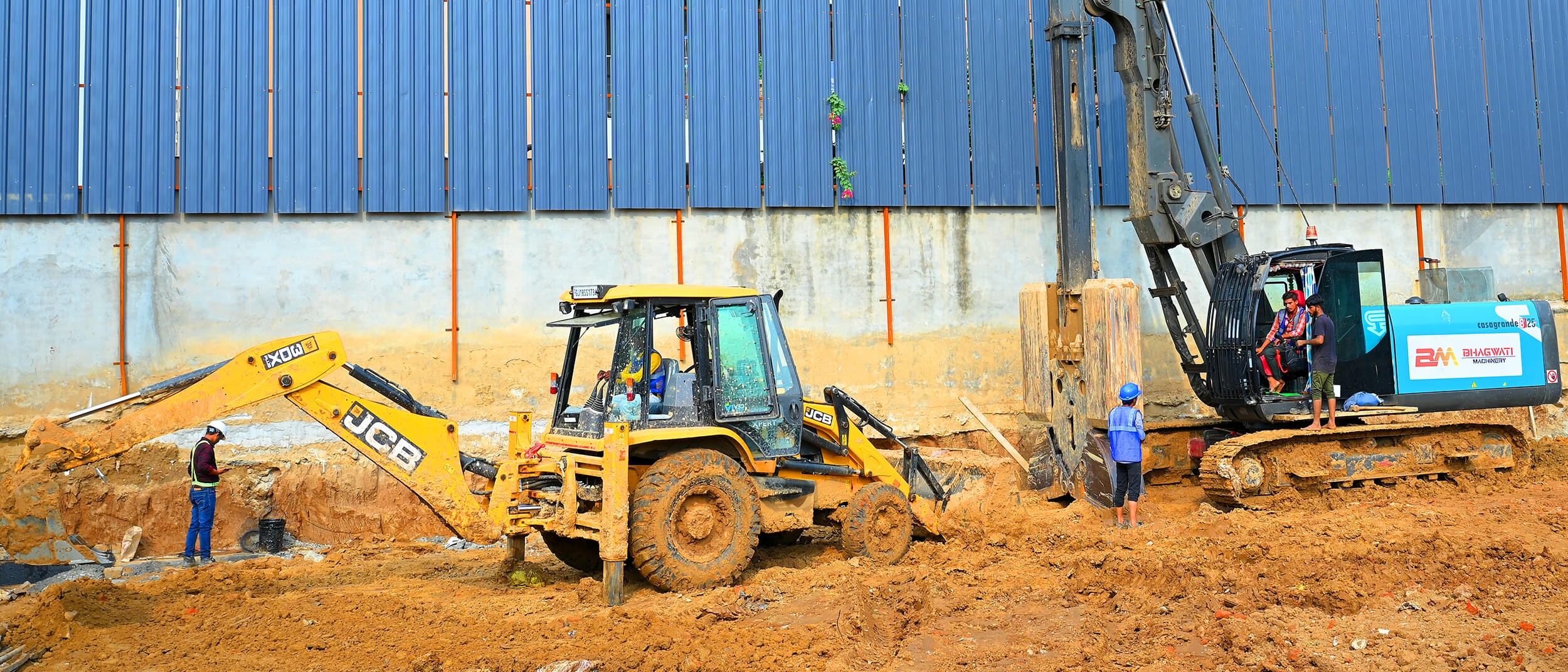
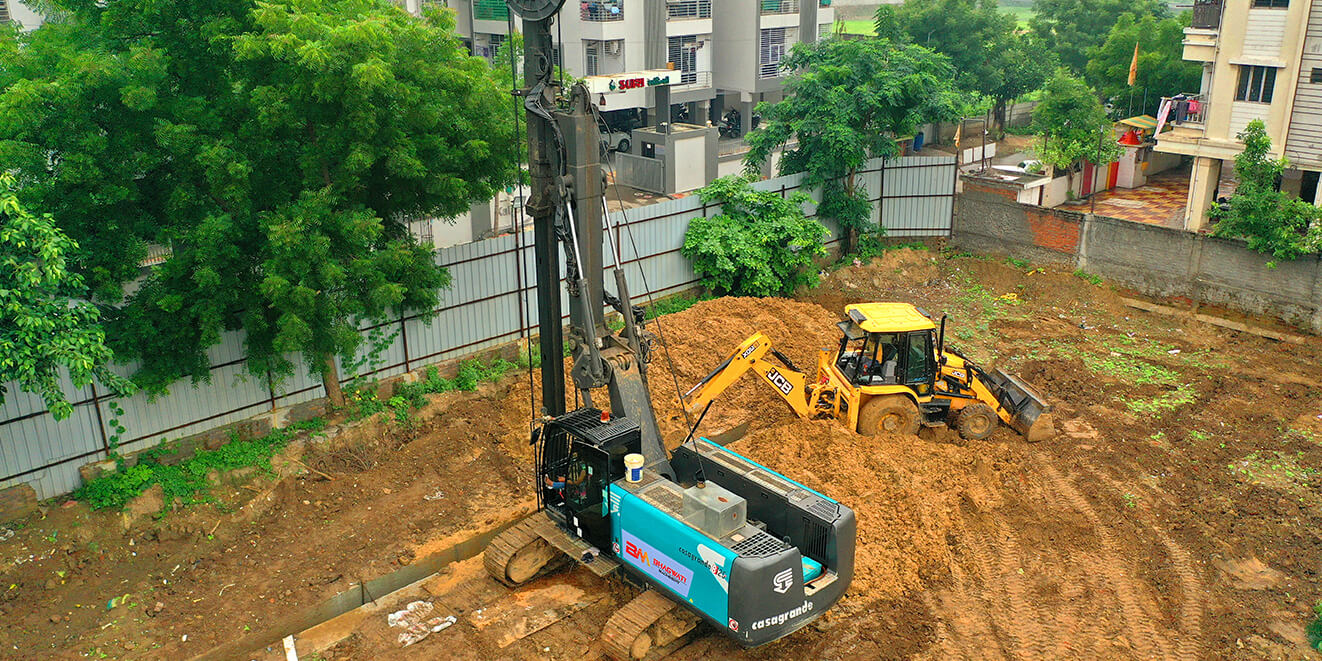
Diaphragm wall work generally requires specialized excavation machinery, reinforcement cages, concrete placement equipment, and systems for managing the excavated material or slurry used during construction.
The building process must be well organized. All panels should be excavated to the required depth, stable, reinforced and properly concreted.
When a project involves both piling and retaining, the experienced piling contractors can also be involved. Depending on the overall foundation and excavation design, their role and construction method will vary. In some deep excavation projects, ground anchor systems may also be considered to provide additional lateral support to the retaining wall and help maintain excavation stability.
Cost of Different Retaining Systems
While cost is a factor, it is not the only one to consider when choosing a retaining system.
The cost can change depending on:
- Excavation depth
- Wall thickness
- Soil conditions
- Groundwater
- Reinforcement requirements
- Concrete quantity
- Equipment requirements
- Site accessibility
- Project duration
- Temporary or permanent use
A diaphragm wall might need more complex equipment and construction than some simpler retaining methods. However, in other projects, the wall may be used as both a temporary retaining wall during excavation and as a permanent underground structure.
The overall project cost should be looked at instead of just the initial construction cost.
How to Select the Right Retaining System?
The first step in the selection of a retaining system is to have a detailed knowledge of the site. Some important questions to consider are:
How deep is the excavation?
The lateral soil pressure and movement of walls are usually more important in deeper cuts.
What type of soil is present?
The goal of soil investigation is to find out the characteristics of the soil during excavation.
Is groundwater present?
The groundwater may have an impact on the stability of the excavation and may require further control.
Is there any nearby building?
The control of ground movement and vibration is more critical when nearby buildings or roads exist.
Is the wall temporary or permanent?
If the wall is to become a permanent portion of the finished structure, it may have different requirements than a temporary retaining wall.
Why Choose Bhagwati Machinery?
There are numerous variations of walls, such as diaphragm, sheet pile, secant pile, contiguous pile, and soldier pile systems.
The selection should be made based on depth of excavation, soil characteristics, groundwater, adjacent structures, space, duration of project and budget.
In situations where there are high stiffness requirements, limited space and the control of surrounding ground movement is significant, diaphragm walls are frequently used for deep excavation works. Other retaining systems may be more suitable for projects with different requirements.
The selection of the final system should be based on a proper site investigation and engineering assessment.
For any project, that demands a reliable retaining structure and deep excavation project, Bhagwati Machinery offers solutions to these challenges in the field of diaphragm wall construction in India.
FAQs about Diaphragm Wall Construction
Which Retaining System Is Suitable for Deep Excavation?
Diaphragm walls, secant pile walls, sheet piles, and other systems can be used for deep excavation. The appropriate choice depends on factors such as excavation depth, soil conditions, groundwater levels, adjacent structures, available space, and engineering requirements.
What Is the Difference Between a Diaphragm Wall and a Sheet Pile Wall?
A diaphragm wall is primarily used to retain soil during excavation. It can also provide structural support for underground structures and may become part of the permanent building structure.
What Affects the Cost of Retaining Systems?
The overall cost may vary depending on factors such as wall depth, thickness, reinforcement, concrete quantity, soil conditions, groundwater levels, equipment requirements, site access, and project duration.
Which Retaining System Is Suitable for Urban Construction?
Several retaining systems can be used for urban construction. Diaphragm walls may be suitable for projects involving deep excavation, limited space, ground movement control, and groundwater management. The final choice should be based on the specific site conditions and engineering requirements.