


Blog | 25 February 2026
Why Basement Diaphragm Wall Construction is Essential for Deep Basements?
Residential complexes that have multiple buildings and commercial complexes that have numerous shops and offices are now feature of all cities that are growing rapidly in India. These modern-day buildings feature high-rise basements set deep in the ground to serve a variety of purposes. Deep basements need diaphragm walls in order to make sure they can be built with a strong foundation.
Learn more what advantages of concrete diaphragm wall construction that allows for deep basements of all kinds of contemporary structures.
What is Diaphragm Wall Construction?
Diaphragm walls can be described as reinforced concrete walls that can be constructed to create deep basements within the earth. The under-slurry method that requires digging a narrow trench is utilized to construct walls. Walls with the thickness of 300mm to 1200 mm are built in as much as 45 m beneath for the subsequent phase of excavation that will be carried out.
Benefits to Diaphragm Wall Construction
Build Basements with Great Depth
An increasing population will mean higher and more expansive commercial and residential structures, which need parking spaces that are comparable. Basement parking spaces are the excellent solution to this. The basements of the past were constructed up to three floors using piling. However, with the diaphragm wall construction, builders are building basements that are as deep as five levels.
The reason for this is that piling could make joints more crowded may cause alignment problems and could cause leaks, however, a deep basement diaphragm wall provide a sturdy foundation and also provide protection walls for basements.
More parking spaces is a sign that these residential and commercial property will be in greater need than properties that have less or no parking spaces. With the rapid growth of urban areas there is a need for parking that has been an important factor in the selection process for tenants, buyers, as well as investors. Homes that have plenty of parking in the basement provide comfort, improved security for the traffic inside and a greater overall worth.
Furthermore, well-planned basement parking helps reduce traffic congestion as well as increases security and improves the utilization of land within crowded urban areas. In commercial buildings, it will ensure a smoother flow of customers and more business opportunities when it comes to residential properties, they add security and a long-term appeal to investment.
Construction Creates Low Vibration Levels
One of the main benefits diaphragm wall construction is the fact that their structure results in less vibrations to the ground, which reduces the possibility of damaging the structures that are nearby. In open excavation, you must use large machinery such as earthmovers, drilling equipment and others, which could affect the foundation of the entire soil in the area and expose nearby buildings at risk of massive or irreparable damage.
It’s among the many reasons that make Bhagwati Machinery is the best diaphragm wall construction company in India.
Concrete Diaphragms Walls Can Serve As Water-Proofing Walls Too
The level of water in the soils in different regions of India is varying from very low to moderate. When the structure becomes deeper, pressure of water can rise and result in damages to the basement structure. Diaphragm walls made of concrete can serve as effective barriers against the pressure of water, due to the water bars as well as crystallized compound that is used within the mixture.
If you live in areas with high levels of water table, our experts recommend that developers hire a reputable waterproofing agency on board so that there’s zero room for errors in the design and construction of the building. A solid waterproofing system is essential for deep basement construction because continuous pressure from hydrostatic forces may cause leakage or structural damages, as well as expensive repairs if they are not dealt with correctly from the start.
Safety of the Structure As Well As the Human Resources
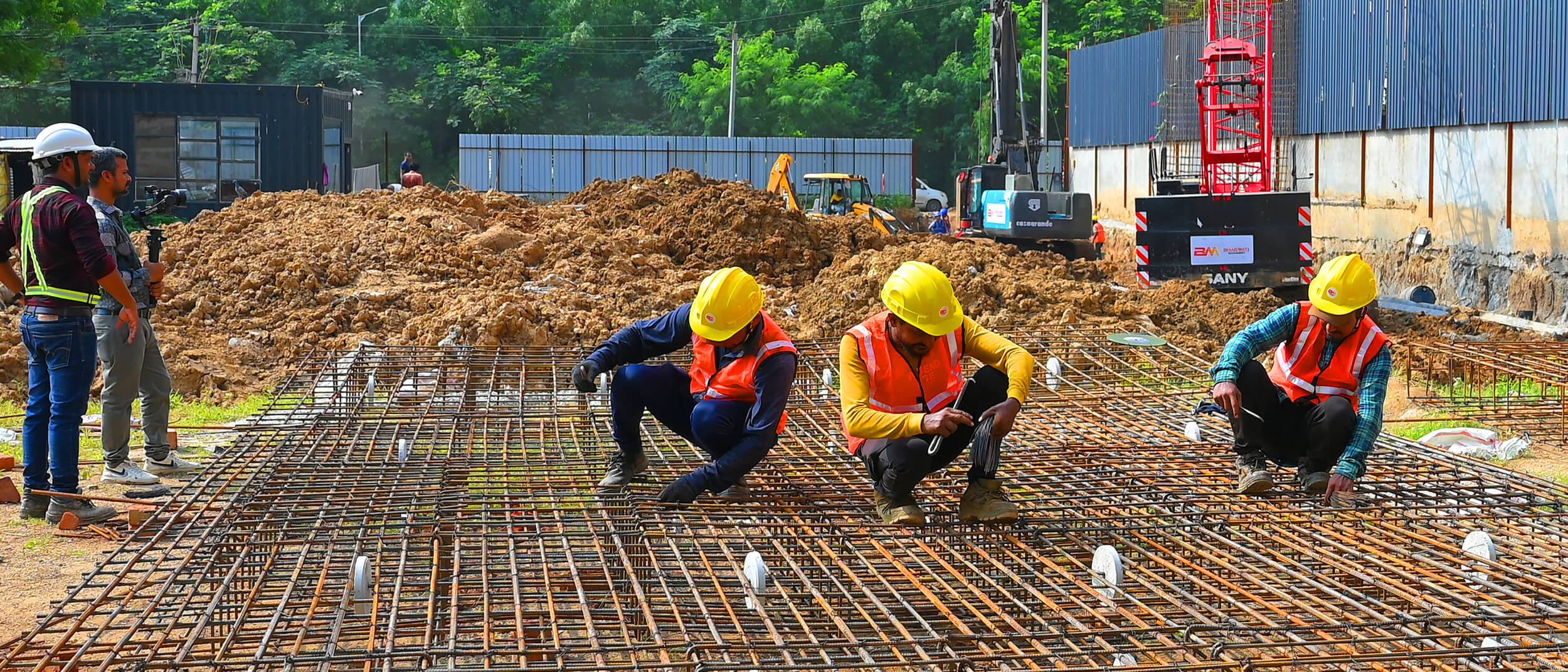
Security is among the most important benefits of building diaphragm walls. It is first and foremost secure for those who are involved during the building of a basement that is deep. Because diaphragm wall construction involves the digging of a narrow trench as opposed to an open excavation, the chance of soil or wall falling down is almost non-existent. This means that workers can be confident and effective when they construct deeper basements.
Another reason is that diaphragm walls form a strong base for superstructures, assuring the safety of individuals who will be living or working within these structures. The high rigidity and load bearing capacity allow the efficient transfer of the vertical and lateral load to the ground. This makes them ideal for large-scale buildings as well as high-rise commercial complexes.
Qualitative Structure
The modern buildings with basements that have diaphragm walls are much stronger than those constructed using piling techniques. Piling needs a retaining wall constructed to support it, diaphragm walls serve as a wall for retaining and an integral part of the structure.
If you’re looking for a reliable piling company in India, you must be crucial to pick experienced contractors that are knowledgeable about the soil, foundation designs and the latest construction methods for long-term structural safety as well as performance.
Conclusion
There are numerous benefits of diaphragm walls being utilized for deep basement construction. With the popularity of diaphragm wall technology used in modern construction, many builders may think about building basements that are deeper to accommodate the growing demands for space in commercial as well as residential construction projects. The technology is a great advantages to allow such projects to occur in the near future.
By integrating diaphragm walls and advanced ground anchor systems making more secure and deeper basements isn’t just possible but also highly effective for the further infrastructure developments.