


Blog | 17 July 2026
Complete Guide to Diaphragm Wall Construction in India
Today’s construction projects require best foundations that are able to carry the weight of the structure and keep it stable and safe. With the development of the city and the rise of buildings, underground development has gained greater significance than ever. This is where a diaphragm wall construction service becomes important.
Diaphragm walls can offer stable support for all deep excavation and foundation works such as high-rise buildings and metro stations, commercial complexes, and underground parking structures. They help to hold the structure together, prevent soil movement, and promote a safe construction environment in difficult soil conditions.
What is Diaphragm Wall Construction?
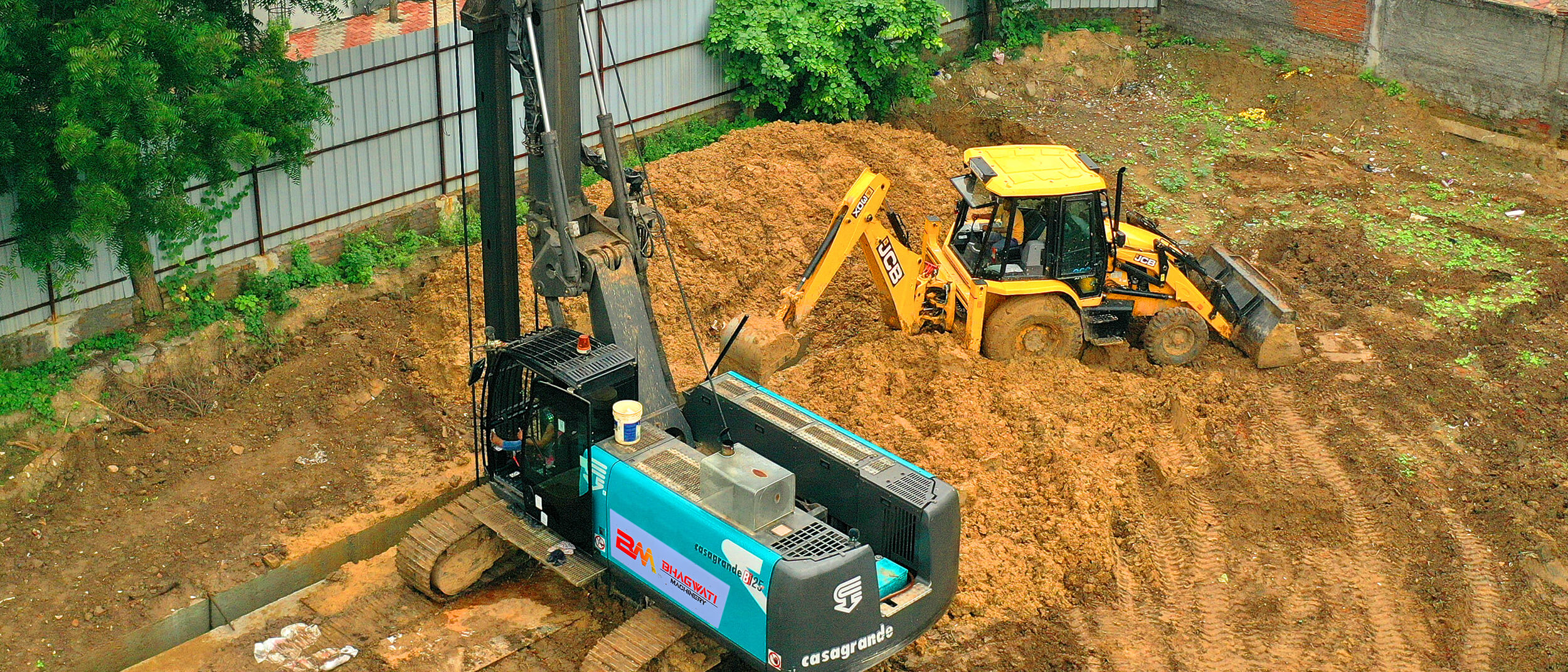
Diaphragm wall construction is a special foundation method that is adopted to build the reinforced concrete foundations below ground level. Before excavation, the walls are built as permanent or temporary retaining walls.
Walls are constructed by digging narrow trenches, maintaining their stability by filling them with bentonite slurry to prevent collapse, installing the steel reinforcement cages, and casting concrete into the trench. After finishing the wall, it is very strong and waterproof; suitable for projects that need deep excavation.
Diaphragm walls are installed in advance of the bulk of excavation, so they enhancing safety and reducing damage to adjacent structures and services.
Why is Diaphragm Wall Construction Important?
Often, the construction in urban areas is located around roads, buildings and underground services. Unless the foundations are adequately supported, they can move the soil and cause damage to the structures.
There are several of advantages of a diaphragm wall:
- Provides excellent lateral support during excavation
- Controls groundwater seepage
- Reduces soil displacement
- Supports deep foundation systems
- Improves construction safety
- Performs well in difficult soil conditions
- Offers long service life with minimal maintenance
The advantages offered by diaphragm walls is why this is one of the most reliable foundation methods for modern construction.
Step-by-Step Diaphragm Wall Construction Process
The achievement of a successful diaphragm wall project depends on following a proper sequence for construction.
Site Investigation
A detailed geotechnical investigation is the first step in the process. Using this information gathered from studies by the engineers, the thickness and depth of walls will be calculated.
A proper plan will make the foundation system work well in the life of the building.
Guide Wall Construction
To keep excavation sites aligned, guide walls are built on the surface. They serve as a reference and they maintain dimensions of the trench so as to remain accurate.
Trench Excavation
Trench panel cutting is done by specially designed hydraulic grabs or trench cutters.
The bentonite slurry is used throughout the excavation process to keep the soil in the trench in place so that the excavation does not collapse until the concrete is installed.
Reinforcement Cage Installation
Once the depth of the trench has been reached, a prefabricated steel reinforcement cage is carefully place in the location. The reinforcement is use to give structure strength to resist earth pressure and building load.
Concrete Placement
The pouring of concrete is done from the bottom of the excavation to the top. The concrete keeps filling in with time, replacing the bentonite slurry and forming a solid and continuous reinforced concrete wall.
Panel Connection
Adjacent panels are formed with the correct joints to make up the whole wall. This results in a continuous retaining wall that will sustain soil and groundwater loads.
Applications of Diaphragm Wall Construction
Diaphragm wall construction in India is now an increasingly popular practice in the construction industry due to its reliability and versatility.
Common applications include:
- High-rise residential buildings
- Commercial complexes
- Metro rail projects
- Underground stations
- Flyovers
- Bridges
- Deep basements
- Underground parking facilities
- Industrial structures
- Water treatment plants
- Tunnels
- Port and marine construction
The technique is particularly appropriate when working within the confines of urban development where neighbouring buildings need to protect.
Basement Diaphragm Walls
One of the most common uses of diaphragm walls is for basement construction.
A basement diaphragm wall is a retaining wall and a portion of the permanent foundation. It can maintain the safe protection of the surrounding soil, and multiple layers can be built on the basement.
It is a valuable solution for commercial buildings, hospitals, shopping malls, hotels and residential towers, buildings with underground parking or service areas.
The construction of basement diaphragm wall in India is gaining momentum as the demand for underground space expands in cities with limited land availability.
Benefits of Choosing Diaphragm Wall Construction
Diaphragm wall has been widely used for deep foundation construction due to its many benefits.
High Structural Strength
The reinforced concrete wall can use for heavy vertical and horizontal loads, ideal for large-scale infrastructure construction.
Excellent Water Resistance
Diaphragm walls can use to effectively minimise the infiltration of water into the excavation, which can help to maintain a dry and stable excavation environment.
Suitable for Deep Excavations
Diaphragm walls can provide stable walls in very deep excavations, unlike conventional retaining systems.
Reduced Ground Movement
The non-compliant wall reduces vibration and creates a safe environment for nearby structures and underground utilities.
Faster Project Progress
Diaphragm walls are constructed with specialized equipment but, when complete, they enable the excavation and structural construction to be carried out efficiently.
Long-Term Durability
Diaphragm walls can be expected to last for years without much maintenance when they are constructed properly.
The Growing Demand for Diaphragm Wall Construction in India
With the rapid growth of infrastructure projects, the demand for diaphragm wall construction India continues to increase. Strong and reliable foundation systems are essential for commercial buildings, city metro rail projects, high-rise towers, underground parking and industrial developments.
Ground anchor systems can be combined with a diaphragm wall for projects that require further ground stabilization to ensure the safety of excavation and structural support.
Why Choose Bhagwati Machinery?
With years of experience in diaphragm wall technology, Bhagwati Machinery is a trusted name in the foundation engineering industry, providing best solutions for residential, commercial, industrial and infrastructure projects. With highly skilled and experienced staff, advanced equipment & machinery and commitment to excellence, Bhagwati Machinery provides a variety of options, enabling clients to build strong and robust foundations for their projects.
As one of the trusted piling contractors in India, we provides reliable piling solutions that ensure long-term strength and stability for demanding construction projects.
Bhagwati Machinery is preferred by clients for:
- Experienced engineers and skilled technical teams
- Modern construction equipment
- High-quality workmanship
- Timely project completion
- Strict quality control procedures
- Focus on safety and reliability
- Customized solutions for different project requirements
- Excellent customer support from planning to project completion
Conclusion
The foundation is the pillar for any construction project. From commercial buildings to metro stations, industrial complexes to residential towers, the choice of foundation system is a critical decision crucial for long-term safety, structural stability & sustainability.
The professional diaphragm wall construction service provides effective support for deep excavations, optimizes the management of groundwater and reduces the movement of soil, and builds safe underground structures that contain the soil. With the continuously increasing complexity of construction, diaphragm walls are still very popular today.
Bhagwati Machinery is the best provider of diaphragm wall construction in India. Our company’s mission is build a strong foundation for the future and engineering excellence, safety, and customer satisfaction are always top priorities.
FAQs about Diaphragm Wall Construction
What is a diaphragm wall?
Diaphragm wall is a type of deep foundation specially made of reinforced concrete wall, which is built below its foundation level and used for foundation support and ground retention in deep excavation work.
Where is diaphragm wall construction commonly used?
It is used in buildings with multiple floors, metro stations, parking structures, tunnels, bridges, industrial projects, commercial projects, and other infrastructure developments.
What are the benefits of using diaphragm wall in construction?
They offer high structural strength, excellent water resistance, minimized ground movement, improved excavation safety, and a long service life.
How to select the right diaphragm wall construction contractor in India?
Check for experience, advanced equipment, professional engineers, safety measures, quality assurance procedures, and past projects.
How deep can a diaphragm wall be constructed?
The depth varies based on project requirements and soil conditions. Modern equipment allows diaphragm walls to be installed to significant depths for large infrastructure projects.
What is the functionality of a basement diaphragm wall?
A basement diaphragm wall supports the surrounding soil, controls groundwater, and may also serve as part of the permanent basement structure.
Why choose Bhagwati Machinery?
Bhagwati Machinery offers experienced professionals, advanced machinery, strict quality standards, and reliable execution for a wide range of foundation engineering projects across India.